
Hurricane Season Checklist: Get Your RGV Home Ready Before the Peak
Hurricane season peaks in August and September. This is the July checklist we give our own clients: roof, openings, drainage, power, insurance, and the 72 hour kit, with real Valley costs.
Hurricane Hanna made landfall on July 25, 2020. It was only a Category 1, and it still dropped more than 15 inches of rain on parts of the Valley, flooded neighborhoods that had never flooded, and left thousands of families without power for days in the middle of summer. The storms that hurt the RGV are rarely the big named monsters you see in movies. They are the wet, slow ones that show up in the second half of the season, park over the Valley, and let the water do the damage.
We are in that window right now. The Atlantic season runs June 1 to November 30, but the peak for South Texas is August and September. That gives you a few weeks to work through this list calmly, well before the cone map shows up on every TV in McAllen.
This is the same rundown we walk our own clients through, whether we built their home to take this weather or they live in a house that went up in 1985. Most of it costs little or nothing. All of it is easier in July than in the 48 hours before landfall.
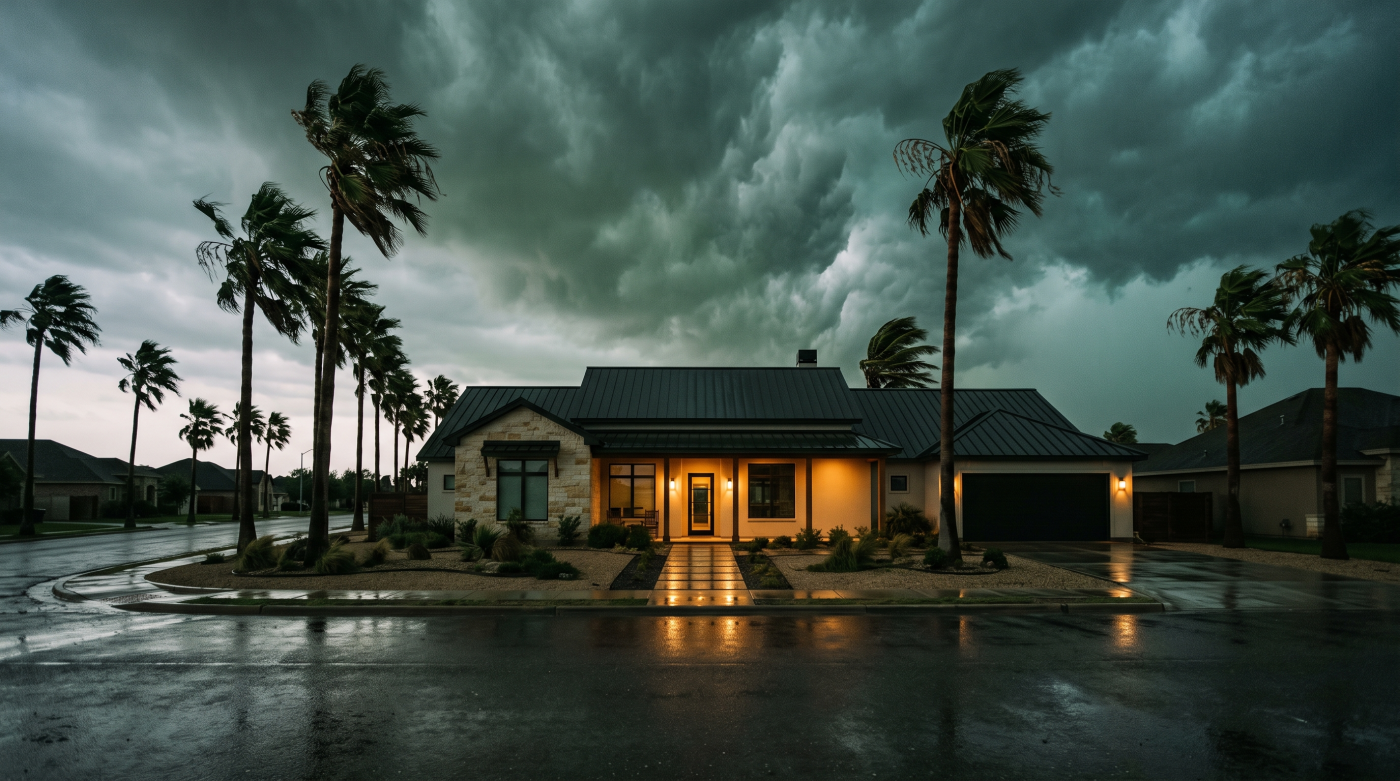
What Storms Actually Do to the Valley
It helps to know what you are actually preparing for. Beulah in 1967 remains the benchmark: it came ashore near the mouth of the Rio Grande as a major hurricane, spun off more than a hundred tornadoes, and produced the worst flooding in Valley history. Dolly in 2008 was only a Category 1 at South Padre Island and still did roughly a billion dollars of damage, most of it from rain that sat over the RGV for days. Hanna followed the same script in 2020.
The pattern is consistent. Inland Hidalgo County rarely takes the headline winds. What it takes is 10 to 15 inches of rain landing on clay soil that cannot drain, followed by a week of 100 degree heat with no electricity. Coastal Cameron County adds storm surge and stricter windstorm insurance rules on top of that. Prepare for water and outage first, wind second, and you are preparing for the storm the Valley actually gets.
Start With the Roof, Because Water Starts There
Almost every insurance claim we see after a Valley storm traces back to the roof. Before the peak, have someone get eyes on it. On a shingle roof you are looking for lifted, cracked, or missing shingles, especially along the edges and ridges where wind grabs first. On any roof, check the flashing around vents, the chimney, and satellite mounts, and look for sealant that has dried out and pulled away around penetrations. A tube of roofing sealant costs about $10. The interior repair after a season of hidden leaks routinely runs into five figures, because water that gets past the roof does not announce itself until the drywall stains.
While someone is up there, have them photograph everything. Dated photos of an intact roof are the single most useful thing you can hand an adjuster after a storm, because they close the argument about whether the damage was preexisting.
If your home was built in the last decade, ask whether it has hurricane straps or clips tying the roof structure to the walls. Newer builds in Hidalgo and Cameron County generally do, and it is one reason we put a metal roof and strapped framing on every Sisu build. If you are not sure what your house has, a home inspector can confirm it in about an hour, and many insurers give a documented discount for wind mitigation features. That inspection can pay for itself in one policy year.
Windows, Doors, and the Opening Everyone Forgets
Wind does not need to break every window. It needs one opening. Once wind gets inside the house, it pressurizes the interior and pushes up on the roof from below, and that is when structural damage starts. Protecting openings is the highest value prep on this list.
- Impact windows: if your home has them, you are done here. Look for the etched label in the corner of the glass, or check your builder paperwork. Every opening on our newer builds gets impact rated glass for exactly this reason.
- Plywood: the old school answer still works if it is done right. Use 5/8 inch exterior grade, cut to fit each opening with a 4 inch overlap, labeled by room, with anchors installed in the wall now so panels go up in minutes. Buy it in July. It disappears from shelves the moment a storm enters the Gulf.
- Window film: worth naming because it gets sold hard every summer. Film helps hold broken glass together. It does not stop a 2×4 moving at 100 mph, and it is not a substitute for panels or impact glass.
- The garage door: the largest and weakest opening in most Valley homes, and the one everyone forgets. A retrofit bracing kit costs $100 to $200 and installs in an afternoon. If the garage door fails, the roof above it usually goes next.
- Entry doors: check that they have three hinges, a deadbolt that throws at least an inch, and intact weatherstripping. Wind driven rain comes in under doors more often than through them.
Trees, the Yard, and Everything That Can Fly
Most of the debris that breaks windows in a Valley storm was in somebody’s backyard that morning. July is the month to walk yours with honest eyes.
- Trim dead limbs and anything overhanging the roofline. Tree crews are affordable and available in July. Once a storm has a name, they get expensive and booked up.
- Know what you will bring inside: patio furniture, umbrellas, potted plants, the trampoline. If it is too heavy to move fast, anchor it now.
- Strap propane tanks upright and shut them off at the valve. Keep them outdoors.
- If there is construction near you, note where the loose material sits. A neighbor’s stack of fence pickets is your problem at 90 mph, and a polite conversation in July beats a claim in September.
Can Your Lot Move Water Fast Enough?
Hanna proved that flooding is the Valley’s real enemy. Our soil is heavy clay. It does not absorb water, it holds it. That means your lot’s grading and drainage do the work, which is why we evaluate drainage before anything else when clients pick a lot.
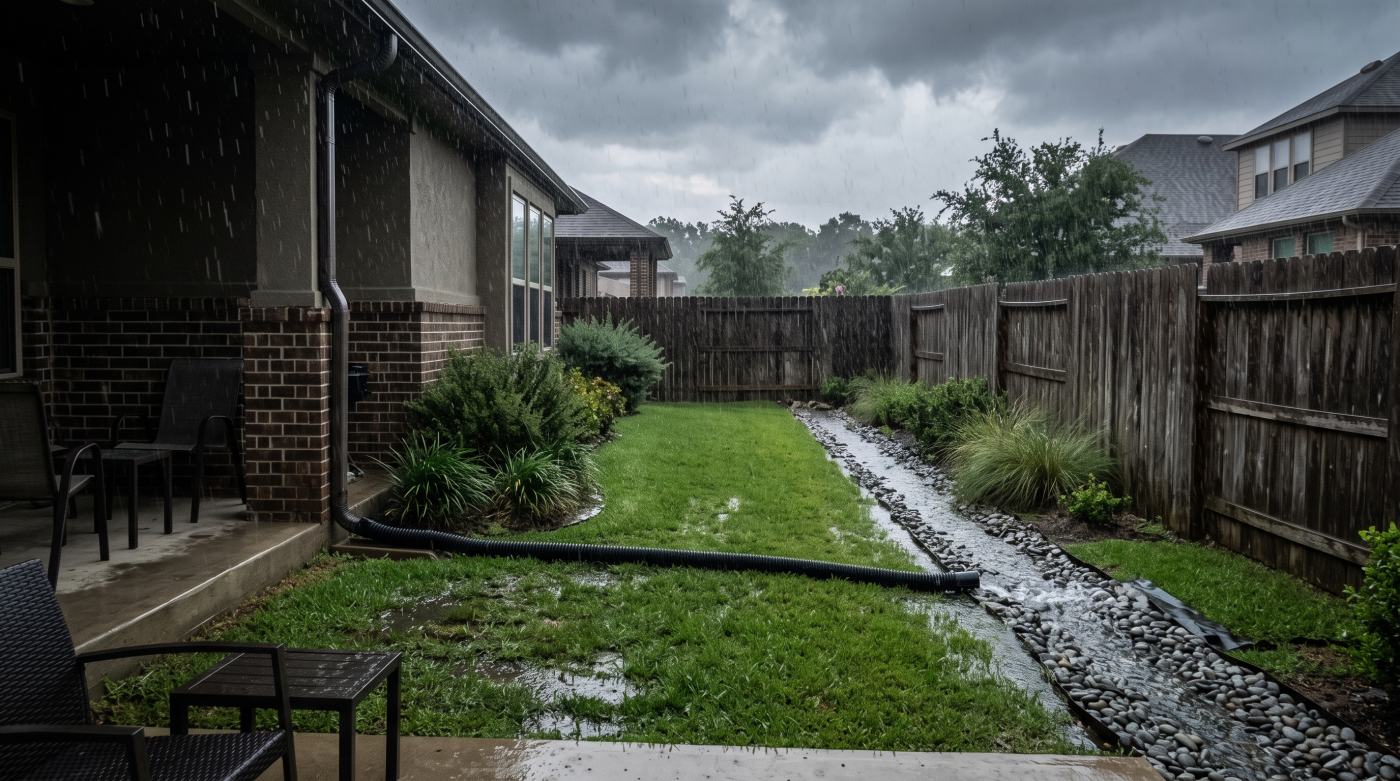
- Clean gutters and downspouts, and make sure downspouts throw water at least three feet from the slab. Extensions cost a few dollars each.
- Check your grade: soil should fall about six inches over the first ten feet away from the foundation. Years of landscaping quietly reverse this on many older homes.
- Walk your lot after the next heavy rain. Standing water against the foundation is a warning sign. A gravel French drain or a shallow swale along the fence line is a weekend project that saves a slab.
- Clear the street inlets near your house. A storm drain buried under grass clippings floods the whole block.
- Look up your address on the FEMA flood map. Standard homeowners insurance does not cover flood, full stop. A separate flood policy through the national program typically takes 30 days to take effect, which is exactly why July is the month to deal with it, and policies outside high risk zones are surprisingly affordable.
Flooding is the Valley’s real enemy. Your lot’s grading and drainage do the work.
What About Power?
After Hanna, parts of the Valley waited close to a week for electricity, in July heat. That is not an inconvenience here, it is a health problem. Decide now what your plan is.
A portable generator in the 7,000 to 9,000 watt range will run a refrigerator, a window AC unit, lights, and phone chargers. Expect $800 to $1,500 for the unit. Add a transfer switch installed by an electrician, roughly $500 to $1,000, so you power circuits safely. Plan fuel too: 15 to 20 gallons covers several days of careful use, stored in proper containers with stabilizer.
A whole home standby unit runs $12,000 to $18,000 installed and starts itself before you notice the outage. For families planning to age in place, or anyone with medical equipment at home, it is worth the conversation.
Two safety notes that matter every single season. Never run a portable generator in the garage or near a window; carbon monoxide kills more people after Valley storms than wind does. And add surge protection: grid power coming back after an outage is dirty, and it takes out AC compressors and appliances. A whole home surge protector at the panel costs $300 to $600 installed and protects the most expensive equipment you own. If your electric bill is already brutal every summer, that same panel visit is a good time to talk about the efficiency upgrades that actually work in this climate.
Insurance and the Paperwork Nobody Reads
The cheapest hour of hurricane prep is a phone call to your insurance agent in July. Three questions: what is my wind and hail deductible, do I have full windstorm coverage, and what does my policy pay for temporary housing if the house is not livable.
- Most Valley policies set the wind and hail deductible at 1% to 2% of the dwelling value. On a $400,000 home, that is $4,000 to $8,000 out of pocket before insurance pays a dollar, and it is much better to learn that number in July than in a hotel parking lot in September.
- If you own property toward the coast in Cameron County, confirm whether your carrier writes windstorm there at all or whether you need a separate policy through TWIA, the state windstorm pool. Inland Hidalgo County policies generally include wind, but verify it, do not assume it.
- Walk every room with your phone recording video. Open closets and drawers, narrate the big ticket items. Ten minutes of footage becomes the backbone of any claim.
- Photograph the roof and exterior while everything is intact, with the date visible.
- Keep digital copies of your policy, deed, and ID somewhere off your property, even if that just means emailing them to yourself.
The 72 Hour Kit
The standard guidance holds, and it holds because it works: one gallon of water per person per day for three days, which means a family of four needs 12 gallons. Add food that needs no cooking, a manual can opener, a two week supply of medications, flashlights and batteries, a battery bank for phones, and cash in small bills, because ATMs and card readers do not work without power.
Round it out with the things your family cannot improvise: pet food, diapers and formula, spare glasses, and copies of the documents from the last section. Two coolers and a plan for ice stretch your refrigerator by days. The full federal checklist at ready.gov is worth ten minutes with a coffee.
One more item that is pure Valley: plan for heat too. Battery powered fans, cooling towels, and electrolyte packets cost almost nothing in July and matter enormously during a week without AC. And put the neighbors on the list. The elderly couple two doors down will not ask for help; check on them anyway.
When the Storm Gets a Name: The Countdown
Everything above happens in July. This part happens when the National Hurricane Center puts the Valley inside the cone.
- 72 hours out: fill every vehicle with gas, refill prescriptions, pull cash, and confirm where the plywood and anchors are. Decide now whether anyone in the house needs to relocate for medical reasons.
- 48 hours out: panels go up, yard comes in, propane gets shut off. Freeze jugs of water; they hold the freezer cold and become drinking water later. Charge everything, including the battery bank you bought in July.
- 24 hours out: cars go in the garage or away from trees, tubs get filled for flushing water, documents and kit stage by the interior room you have chosen, the one with no windows. Text your out of town contact the plan.
- After: stay off flooded roads, run the generator outside only, photograph damage before touching anything, and call the insurance number you saved in July.
After the Storm: Heat, Mold, and the First 72 Hours
What you do in the three days after the sky clears decides whether you have a repair or a renovation. In Valley humidity, mold starts colonizing wet drywall within 48 to 72 hours, and it does not wait for the adjuster.
- Photograph and video everything before you touch it, then call your claim line the same day. Claims are worked in the order they arrive.
- Get water out fast. Wet carpet pad goes to the curb the day you find it. Pull baseboards from soaked walls and open wet cavities so air can move. After the refrigerator, your generator’s job is fans and a dehumidifier.
- Tarp the roof, do not rush the repair. A properly anchored tarp buys weeks. A rushed patch from an out of town crew working the storm buys a second claim.
- Be careful who you hand money to. After every named storm, unlicensed contractors sweep the Valley asking for cash deposits. Use licensed local trades, get everything in writing, and pay as work completes, never all up front.
- Keep every receipt, including hotels and meals if you cannot stay in the house. That is what the loss of use coverage from your July phone call pays for.
What If Your Home Is a Newer Build?
A home built right for this climate shortens the list dramatically. On our builds, the slab is engineered for Valley clay, the roof is metal and strapped to the frame, the envelope is sealed with spray foam that keeps wind driven rain out of the wall cavities, the openings carry impact rated glass, and the lot is graded to move water away from day one. The materials are chosen for this weather. Owners of homes like that mostly need the paperwork, the kit, and a power plan.
“We design for Hanna, not for the average year,” says Daniel Estrada, founder of Sisu Development. “If a house can take 15 inches of rain and a week of 100 degree heat without power, everything else is easy.”
The Short Version
- Roof inspected, sealed, and photographed with dates
- Plywood cut, labeled, and anchored, or impact windows confirmed
- Garage door braced, entry doors checked
- Trees trimmed, flying objects identified
- Gutters clean, grade checked, flood zone looked up, flood policy considered
- Generator plan, fuel plan, surge protection
- Agent called: wind deductible, windstorm coverage, loss of use
- Video inventory done, documents stored off site
- Water, food, meds, cash, and coolers for 72 hours
Nine lines. Work through one a week and you are ready before the Gulf wakes up.
Building in the Valley?
If you want a home where most of this list is handled by the construction itself, that conversation starts long before a storm has a name. Call or text us at (956) 414 8777, or write to destrada@sisudevelopment.com.
Sisu Development LLC, for a better living.
Building in the Valley?
Let’s talk.
Daniel runs every Sisu build personally and answers his own phone. Schedule a call, send a note, or just ask a question.