
What Home Insurance Really Costs on New Construction in the RGV
Texas premiums average $3,800 to $4,900 a year, and the house you buy decides your side of that line. Wind deductibles, TWIA rules, flood, and the builder documents that cut your rate.
Texas homeowners pay some of the highest insurance premiums in the country. The statewide average runs between $3,800 and $4,900 a year in 2026, roughly $1,500 above the national average, and coastal ZIP codes can clear $10,000. Yet two families on the same McAllen street can pay wildly different premiums for similar houses, and the difference usually comes down to one thing: what the house is made of and when it was built.
Nobody explains this before you buy. Lenders quote you principal and interest, builders quote you price per square foot, and insurance shows up as a line item at closing that nobody unpacked. So here is the unpacking: what a policy covers, what new construction changes, the deductible that surprises everyone, and the documents your builder should hand you that directly cut your rate.
Why Insurance Costs What It Costs in Texas
Insurance prices risk, and Texas concentrates it: hurricanes on the coast, hail everywhere, and rebuild costs that climbed hard over the past five years. Carriers responded by raising rates, tightening roof rules, and in some coastal areas pulling back entirely. The Valley sits in an interesting middle position. Hidalgo County is inland enough that the standard market still writes wind coverage, while parts of Cameron County fall under coastal windstorm rules. Where your lot sits changes what you pay and who will even quote you.
What a Texas Homeowners Policy Actually Covers
Every policy is a bundle of five coverages, and knowing them helps you compare quotes on substance.
- Dwelling: rebuilds the structure. This should equal replacement cost, meaning what it takes to rebuild the house at today’s labor and material prices. If you know what it costs to build per square foot in McAllen, you can sanity check this number yourself.
- Other structures: fences, detached garages, casitas. Usually 10% of dwelling coverage, worth checking if you have a big outdoor build out.
- Personal property: your stuff. Push for replacement cost here too.
- Liability: protects you if someone is hurt on your property. Cheap to raise; most families should carry at least $300,000.
- Loss of use: pays for the hotel and meals if the house is unlivable after a covered loss. After a hurricane, this is the coverage families lean on for months.
The New Construction Advantage
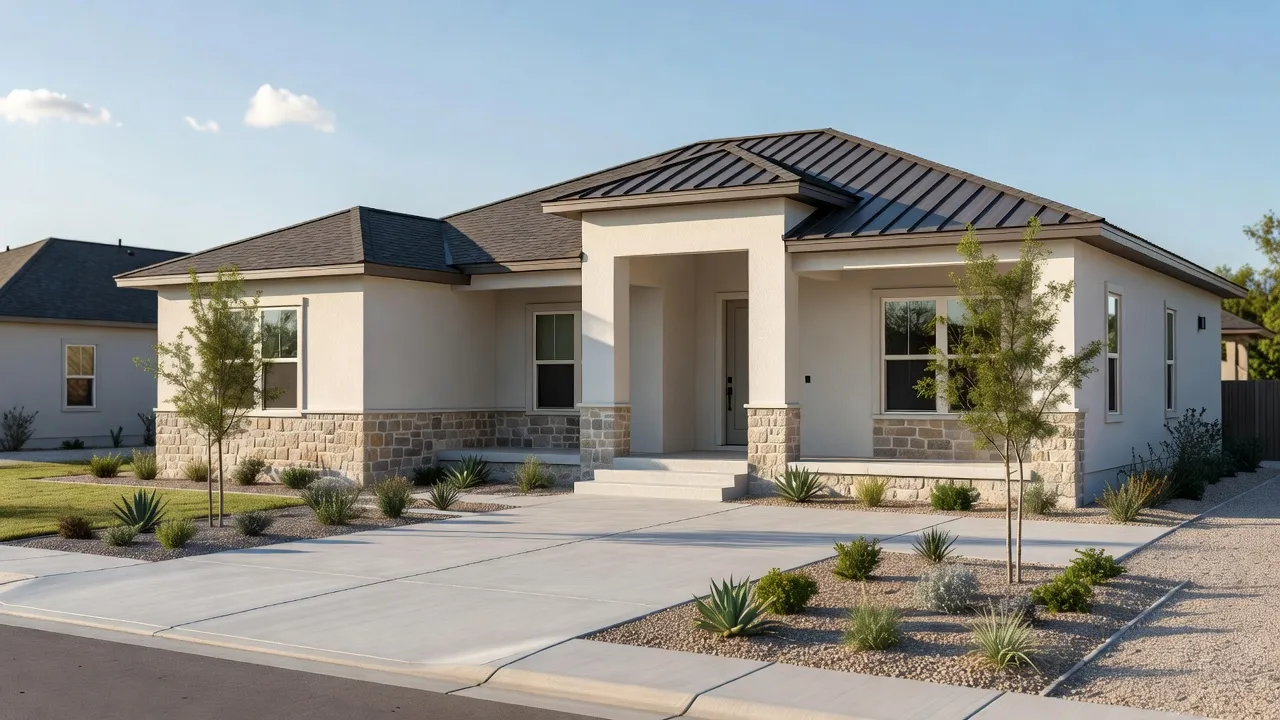
Carriers price the roof first and everything else second, and a new home wins on almost every rating factor at once. A brand new roof with documented installation. Plumbing, electrical, and HVAC with zero wear. Construction to the current building code. A clean claims history. Depending on the carrier, that stack of advantages commonly lands 10 to 25 percent below what the same family would pay on a 1990s resale, and on older homes with aging roofs the gap gets wider every year as carriers apply roof age surcharges or drop to actual cash value roof coverage.
This is a real number in your monthly budget. On a $4,500 premium, 20 percent is $900 a year, every year. When you compare a new build against a resale, put that line into the math along with the energy bill difference, because the sticker price alone does not tell the story.
What Older Roofs Are Doing to Valley Premiums
The quiet story in Texas insurance right now is the roof crackdown. After years of hail and wind losses, many carriers now surcharge shingle roofs past 10 or 12 years, and some quietly switch older roofs from replacement cost to actual cash value, meaning they pay what the old roof was worth, not what a new one costs. On a 15 year old roof, that difference can be most of the bill.
If you own a resale, this changes the reroof math. A new roof is also a rate reset: it removes the age surcharge, restores replacement cost treatment, and with a metal upgrade it can flip the house into a better rating class entirely. If you are buying, ask the roof’s age before you fall in love, because the seller’s premium is not the premium you will be offered. And if you are building new, this whole section is a problem you simply do not have for a decade or more.
Carriers price the roof first and everything else second, and a new home wins on almost every rating factor at once.
The Wind and Hail Deductible Everyone Misses
Texas policies carry two deductibles. The one everyone remembers is the flat all perils deductible, often $1,000 to $2,500. The one that matters in the Valley is the separate wind and hail deductible, set as a percentage of your dwelling coverage, usually 1 to 2 percent.
Run the math on your own policy tonight. A $400,000 home with a 2 percent wind deductible means the first $8,000 of hurricane or hail damage is yours. Choosing 1 percent instead of 2 raises the premium some, but it cuts your worst day exposure in half. There is no universally right answer, but there is a wrong way to find out what you picked, and it involves a roofer’s estimate in September. Our hurricane season checklist walks through the July phone call that surfaces this number.
Windstorm Rules: Hidalgo vs Cameron County
This is the part that trips up buyers moving within the Valley. In inland Hidalgo County, McAllen, Edinburg, Mission, Pharr, standard homeowners policies generally include windstorm coverage, and your job is simply to confirm it is there and not excluded.
In the designated coastal zones of Cameron County, many standard carriers exclude wind, and homeowners buy it separately through TWIA, the Texas Windstorm Insurance Association. New construction in those zones needs a windstorm certificate, commonly called a WPI 8, issued when the home is built to the required windstorm standard and inspected during construction. If you are building toward the coast, that certificate is not paperwork trivia; without it, insuring the home through TWIA gets complicated and expensive. It has to be handled while the home is going up, which is a builder responsibility, so ask about it before you sign.
Flood Is Always a Separate Policy
Flood coverage comes from a separate flood policy, in Texas and everywhere else. After Hanna put parts of the Valley underwater in 2020, plenty of families learned this at the worst possible moment.
- Look up your address on the FEMA flood map. If you are in a high risk zone and carry a mortgage, flood insurance is required. If you are in an X zone, it is optional and comparatively cheap, and Valley rain does not read the map.
- Policies through the National Flood Insurance Program typically take 30 days to take effect. You cannot buy it the week a storm is named.
- New construction helps here too: a lot graded to move water away from the slab, which is how we build every home, is the cheapest flood mitigation that exists.
What Actually Moves Your Premium
Beyond age and location, these are the levers carriers actually rate on, roughly in order of weight.
- Roof material and age: a metal roof with documented installation is the single strongest lever on a Valley quote. Some carriers discount it outright; all of them prefer it.
- Wind mitigation features: hurricane straps, impact rated windows, sealed roof deck. Discounts exist, but only when documented.
- Claims history: both yours and the property’s. A claims free house is worth real money at quoting time.
- Deductible choices: raising the flat deductible from $1,000 to $2,500 usually trims the premium meaningfully. Do it only if your emergency fund agrees.
- Credit based insurance score: legal in Texas and heavily used. Improving credit quietly improves your renewal.
- Bundling: pairing home and auto with one carrier commonly saves 10 to 20 percent across both.
- Security and water monitoring: smaller discounts, but monitored alarms and leak sensors are cheap and stack.
Mistakes That Quietly Raise Your Premium
- Filing small claims. A $2,000 claim can follow the property for three to five years and cost more in surcharges than it paid out. Save the policy for losses that would actually hurt.
- Letting coverage lapse. Even a short gap reads as risk. Carriers price continuous coverage; set the premium on autopay and calendar the renewal instead.
- Insuring the purchase price. Land does not burn. Paying to insure it buys nothing except a bigger premium.
- Under insuring the rebuild. The opposite error is worse. If construction costs rose and your dwelling limit did not, you are the one funding the gap after a total loss. Review the limit against current build costs every couple of years.
- Auto renewing blind. Renewal repricing is where carriers recover losses. Two quotes at renewal keeps yours honest.
- Pools and trampolines without the paperwork. Both are fine to own and insure, but tell your carrier and meet the fencing requirements. An undisclosed pool is a denied liability claim waiting to happen.
The Builder Documents That Lower Your Rate
Here is the part almost nobody uses, because almost nobody knows to ask. Carriers only give discounts for what they can verify, and your builder is the source of the verification. Before closing, ask for a simple packet:
- Roof specification and installation date, with the material documented
- Evidence of hurricane straps or clips and the sealed envelope, photos taken during construction work fine
- Window ratings, especially if the glass is impact rated
- The final inspection paperwork showing code compliance, and in coastal zones the WPI 8 windstorm certificate
- A one page spec sheet the agent can attach to the underwriting file
“We photograph the strapping and the roof deck on every build before it gets covered up, because that photo is worth money to our clients every single year at renewal,” says Daniel Estrada, founder of Sisu Development. “Ten minutes of documentation during framing beats ten years of paying for coverage the house already earned.”
Real Numbers for Valley Homes
Every quote is its own animal, so treat these as honest ranges. For a new 2,000 to 2,500 square foot build in Hidalgo County with a metal roof and documented wind mitigation, families commonly see quotes meaningfully below the Texas average, while the same size 1990s resale with a 12 year old shingle roof often quotes at or above it, sometimes by a lot once roof surcharges land. The statewide average of $3,800 to $4,900 is the yardstick; where you fall against it depends mostly on the house.
The honest way to get your number is 30 minutes with an independent agent and the spec packet from the last section. Anything more precise from a blog post, ours included, is a guess wearing a suit.
How to Shop It the Right Way
- Use an independent agent who writes for multiple carriers, and get at least three quotes. The Texas Department of Insurance runs HelpInsure for side by side shopping.
- Compare coverage and premium together: same dwelling limit, same wind deductible, same replacement cost settings, or the comparison is fiction.
- Insure the rebuild cost. The land under your home does not burn.
- Ask each carrier which of your documented features they discount. The answers differ more than people expect.
- Re shop every two or three years. Loyalty is not a rating factor in your favor.
Seven Questions to Ask Before You Sign
- What is my wind and hail deductible in dollars?
- Is windstorm included, or excluded and written separately?
- Is the roof covered at replacement cost or actual cash value, and does that change as it ages?
- Which of my home’s documented features earn discounts with you specifically?
- What does loss of use actually pay, and for how long?
- Is water damage from sudden pipe failure covered, and is there a mold cap?
- What would this same policy cost with the other deductible option?
An agent who answers all seven without checking is an agent worth keeping. An agent who dodges two of them just answered a different question.
Who Insures the House While It Is Being Built?
One more question every custom home client eventually asks. During construction, the home is covered by builder’s risk insurance, a policy specifically for structures under construction, alongside the builder’s general liability. On our projects, Sisu carries both, and your construction lender will ask for proof before the first draw. Your own homeowners policy starts at closing, which means the smart time to start quoting it is about a month before you get keys, with the documentation packet already in hand.
What Actually Happens at Claim Time
A policy is only as good as the claim it pays, so it is worth knowing the mechanics before you ever need them. You report the loss, the carrier assigns an adjuster, the adjuster inspects and writes an estimate, and payment follows the policy terms minus your deductible. Where families lose money is in the gaps: damage they cannot prove existed, deadlines they miss, and repairs they authorize before anyone documents anything.
- Your best evidence is the ten minute video inventory and the dated exterior photos from our hurricane season checklist. Take them now, while nothing is wrong.
- Photograph damage before any cleanup or temporary repair, then prevent further damage; policies require you to mitigate, and they reimburse reasonable costs like tarps.
- Keep a simple claim diary: who you spoke to, when, and what was said. Large storms mean overworked adjusters and details fall through.
- If the first estimate feels short, you can request a reinspection and submit contractor bids. Be cautious with anyone who asks you to sign over your claim benefits on the driveway; read anything you sign for a claim the same way you would read a contract, because it is one.
The Short Version
- Texas averages $3,800 to $4,900 a year; the house you buy decides which side of that you land on
- New construction commonly quotes 10 to 25 percent below comparable resales
- Know your wind and hail deductible in dollars
- Hidalgo County: confirm wind is included. Coastal Cameron: ask about TWIA and the WPI 8 before you build
- Flood is always separate and takes 30 days to start
- Get the builder documentation packet and hand it to your agent
- Three quotes minimum, compared on identical coverage
One more habit worth building: once a year, put your policy declarations page next to your mortgage statement and read the numbers together. Escrowed insurance hides inside the house payment, which is exactly why premiums creep up for years without anyone noticing. Fifteen minutes every renewal season, with the seven questions above in hand, is the cheapest money management there is in homeownership.
Building in the Valley?
Every Sisu home closes with the documentation packet that earns these discounts: roof specs, strapping photos, window ratings, and the inspection trail. If you want a home that costs less to insure every year it stands, that starts at the framing stage. Call or text us at (956) 414 8777, or write to destrada@sisudevelopment.com.
Sisu Development LLC, for a better living.
Building in the Valley?
Let’s talk.
Daniel runs every Sisu build personally and answers his own phone. Schedule a call, send a note, or just ask a question.